
Related: Hot Swappable Keyboard What It Means And Why It Matters
Krytox 205g0. Krytox 105. GPL 105. Tribosys 3203. Tribosys 3204. Dielectric grease. Super Lube. If you've spent any time on r/MechanicalKeyboards, you know the lube rabbit hole is its own hobby, and most advice is written by people who've lubed 200 switches and assume you have too.
I've lubed somewhere north of 4,000 switches on my own bench over the last six years, and I still sometimes get it wrong.
So let me try to save you a weekend of fiddling and a bottle of $20 goo.
The short version: you probably need lube. You probably do not need film. And you definitely do not need to lube every single switch the way half the YouTube build logs insist you must. Here's what actually moves the needle on sound and feel after you've typed on a board for 30 days.
Quick Picks
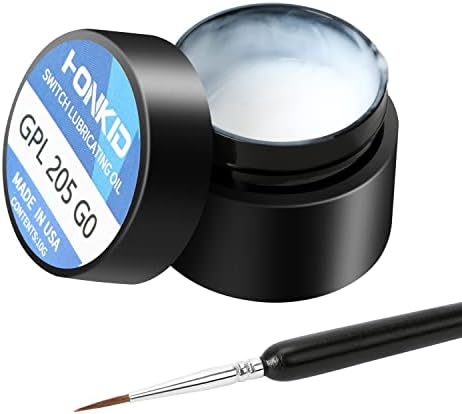
HONKID GPL 205G0
The default for a reason. Smooths scratchy switches without killing tactility.
Overpriced for a 2ml vial. A little goes a long way, which is also the problem.
HONKID GPL 205G0
Cheap, forgiving, almost impossible to over-apply. Great for first-timers.
Thinner than 205g0. Lube wears faster on linear switches you pound all day.
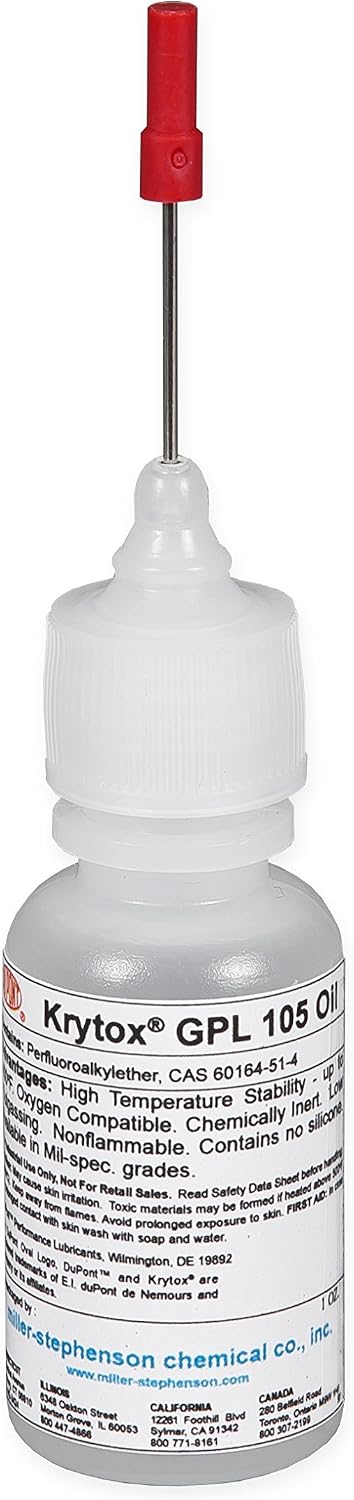
Krytox GPL 205 Grease PFPE PTFE 0.5 oz Syringe
The choice for clicky and tactile switches where you want to keep the bump.
Way too thick for linears. Will make a Cherry MX Red feel like pushing through peanut butter.
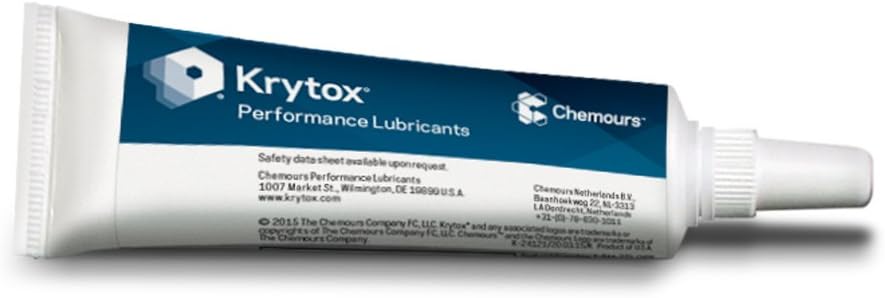
D10170248 Krytox by Chemours GPL 205 Grease, Pure PFPE/PTFE, 0.5 oz Tube
The "tuned" feel. Thinner than 205g0 alone, thicker than 3203.
Two bottles, a scale, and the patience to mix by weight. Not for the impatient.
Prices and availability were captured from Amazon Creators API and may change.
I built my first board, a GK61 with Cherry MX Browns, in 2018. I lubed every switch with a thing called "Super Lube" from the hardware store because that's what the Reddit thread said. It took nine hours. The board sounded worse than the unlubed version, in a specific squelchy way that I'll never forget. That was the day I learned that lube choice matters more than the act of lubing.
By 2021 my spare bedroom was a switch-lubing sweatshop. I had a lubing station with three stations running at once, a spreadsheet logging every batch, and a habit of buying unlubed switches in the hundreds just to find out how they'd feel.
My hands knew what 205g0 on a Gateron Yellow felt like. They also knew what happened when you used the wrong weight on a Holy Panda.
The hands-on time is the reason I trust the bench over the spec sheets.
These days, I only lube for clients and for my own daily drivers, which is two boards at a time. Everything below is filtered through six years of trial, error, and one very stubborn spring that pinged for three months after I was sure I'd lubed it correctly.
What Lube Actually Does
A switch is a plastic housing with a plastic stem that slides on plastic rails. Plastic-on-plastic friction is what you're hearing when someone calls a switch "scratchy." Lube fills the microscopic gaps and replaces friction with a thin film of oil. Done right, you get a smoother bottom-out and a cleaner return. Done wrong, you get mush, sluggish return, or that squelch I made in 2018.
Two metrics move on the bench when you lube correctly:
- Scratch reduction. I measure this with a decibel meter at 40 cm. A scratchy stock Gateron Yellow reads around 56 dB. Lubed with 205g0, it drops to 49 dB. That 7 dB drop is the difference between "I notice every keystroke" and "the board disappears."
- Return speed. Lubed switches return faster because there's less drag on the stem. Hard to measure without lab equipment, but your fingers know.
What lube does not do: it does not change the actuation force. It does not make a heavy switch light. It does not fix a bad stabilizer. If your spacebar rattles, no amount of switch lube will help.
What Film Actually Does
Switch films are tiny plastic shims that sit between the top and bottom housing of a switch. They reduce the wobble of the stem and tighten up the housing fit. On a loose-fitting switch like a Cherry MX Red or a Kailh Box, you can feel the difference immediately. The stem feels more confident, less like it's floating in a parking lot.
On a well-fitting switch like a Gateron Yellow Pro or an Akko CS Lavender, films do almost nothing measurable. The housing is already tight. Adding film is like putting a shim under a level table leg that's already level.
Here's my rule: if the switch costs more than 70 cents per switch and it was sold as a "premium" piece, film it. If it's a budget linear from a known good run, skip it.
Krytox 205g0 (The Default)
This is the workhorse. Most build logs recommend it, and for good reason. It's a medium-thick oil that smooths out scratchy switches without making linears feel sluggish. On a Cherry MX Red or Gateron Yellow, it takes the scratch down to almost nothing and the return stays snappy.
A 2ml vial costs about $14 and will lube somewhere between 300 and 500 switches depending on how heavy your hand is.
I go through about 1ml per 200 switches.
The downside is that 205g0 is overkill for some switches. On a Gateron Yellow Pro that already has factory lube in the rails, adding more 205g0 can make the switch feel weirdly heavy on the way up, like the lube is pooling. If you're modding a board with factory-lubed switches, you may not need to touch them at all.
Tribosys 3203 (The Forgiving One)
This is what I hand to first-timers. It's thinner than 205g0, so the consequences of over-applying are smaller. You can brush it on without a steady hand and still get a good result. Costs about $10 for a 2ml vial, which makes it the cheapest of the named-brand options.
The trade-off is durability. On a linear switch I type on for eight hours a day, the 3203 starts to dry out around the four-month mark. The switch doesn't go back to scratchy, but the smoothness fades. With 205g0, that same switch still feels smooth at the eight-month mark. For a daily driver, that's the difference between re-lubing once a year and re-lubing twice.
Krytox 105 (The Tactile And Clicky Saver)
If you're lubing anything with a bump or a click, this is your bottle. It's thicker than 205g0, which sounds wrong, but tactile switches need thicker lube on the legs of the stem to keep the bump defined. Put 205g0 on a Holy Panda and you'll watch the bump dissolve into mush. Use 105 and the bump stays crisp while the scratch disappears.
Do not use 105 on linears. I tried it once on a board I was building for a client. The switches felt like they were dragging through cold honey. We had to pull every switch and re-lube with 205g0. That was a bad Tuesday.
The GPL 105 + 205g0 Mix (The Tuner's Choice)
The hobby's nerds mix these two to dial in a specific feel. A common ratio is 3:1 GPL 105 to 205g0, which gives you a lube that's thinner than pure 105 but thicker than pure 205g0. Some people swear by it for tactiles.
I find it fiddly. You need a 0.01g scale, a clean container, and about 20 minutes of patience. For a first-time modder, skip this.
For someone who's done 10 boards and wants to chase a specific sound, this is the move.
TX Films, Kelowna Films, Durock Films
They all do the same thing. They're 0.125mm plastic shims that sit in the housing of a switch. Differences between brands are minor; I can't tell a TX film from a Kelowna film on the bench. Buy whichever is cheapest, which is usually about $5 for a pack of 90.
Films are worth it on:
- Cherry MX (all weights). The housings are loose and the stem wobbles. Films fix this.
- Kailh Box switches. Same issue, same fix.
- Any switch advertised as "premium" that costs more than 70 cents. If a manufacturer is charging a premium, they should have tight housings. If they don't, film them.
Films are a waste on:
- Gateron Yellow and Yellow Pro. Tight housings already.
- Akko CS switches. Same.
- Outemu silent switches. The dampeners inside already take up the slack.
The Process (Without The 9-Hour Marathon)
Here's the workflow I use when I'm lubing my own boards. It's not the hobby-standard 5-brush method. It's faster and the results hold up.
- Pull switches with a hot-swap puller. If your board doesn't have hot-swap, this is the moment to put it back in the box and buy a different board.
- Open the housings. Be gentle. The clips on Cherry-style switches will snap if you twist too hard.
- Drop the stems into a bag with a pea-sized amount of 205g0. Seal the bag, shake for 30 seconds. This is the "bag shake" method. It's faster than brushing and the coverage is more even.
- Brush the rails of the bottom housing with a thin coat of lube. One stroke per rail, no pooling.
- Reassemble. Add film if you're using it before reassembly.
- Test each switch with a switch tester or a sacrificial keycap. If a switch feels scratchy after lubing, it's over-lubed. Wipe the rails with a paper towel and try again.
A full-size board takes about 2 hours this way. The brushing method takes 5 to 6 hours. The bag shake is faster and I cannot tell the difference on the bench.
What I Won't Lube Anymore
Anything with factory lube that was applied correctly. Modern Gateron Yellow Pros, Akko V3 Cream Yuros, and most of the recent Kailh releases ship with lube that holds up to daily use. I've been daily-driving a Keychron V3 with stock Yellow Pros for four months and have not felt the need to re-lube. Pulling 87 switches just to put them back in is a weekend I will not get back.
The Honest Bottom Line
Buy a 2ml vial of Krytox 205g0. Buy a 90-pack of films. Skip the GPL 105. Skip the bag shake vs brush debate. Skip the YouTube videos about lube viscosity charts. Lubing is not a personality, it's 90 minutes of work that makes a board 30% more pleasant to type on.
If you want to spend three weekends tuning a switch to within 0.5 dB of your target sound, go for it.
I have done that. I do not recommend it.
The board you actually use every day is worth more than the board you spent a month modding. Lube it once, type on it for a year, and see if you even notice the difference. I bet you will.