
Our Top Picks
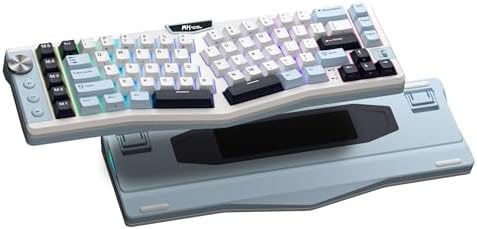
 Visit on Amazon →
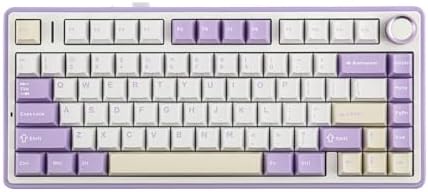 Visit on Amazon →
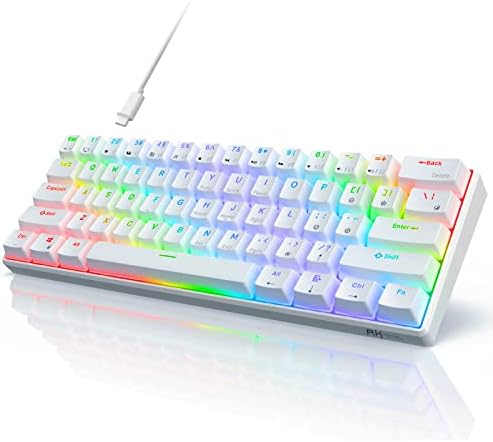 Visit on Amazon →
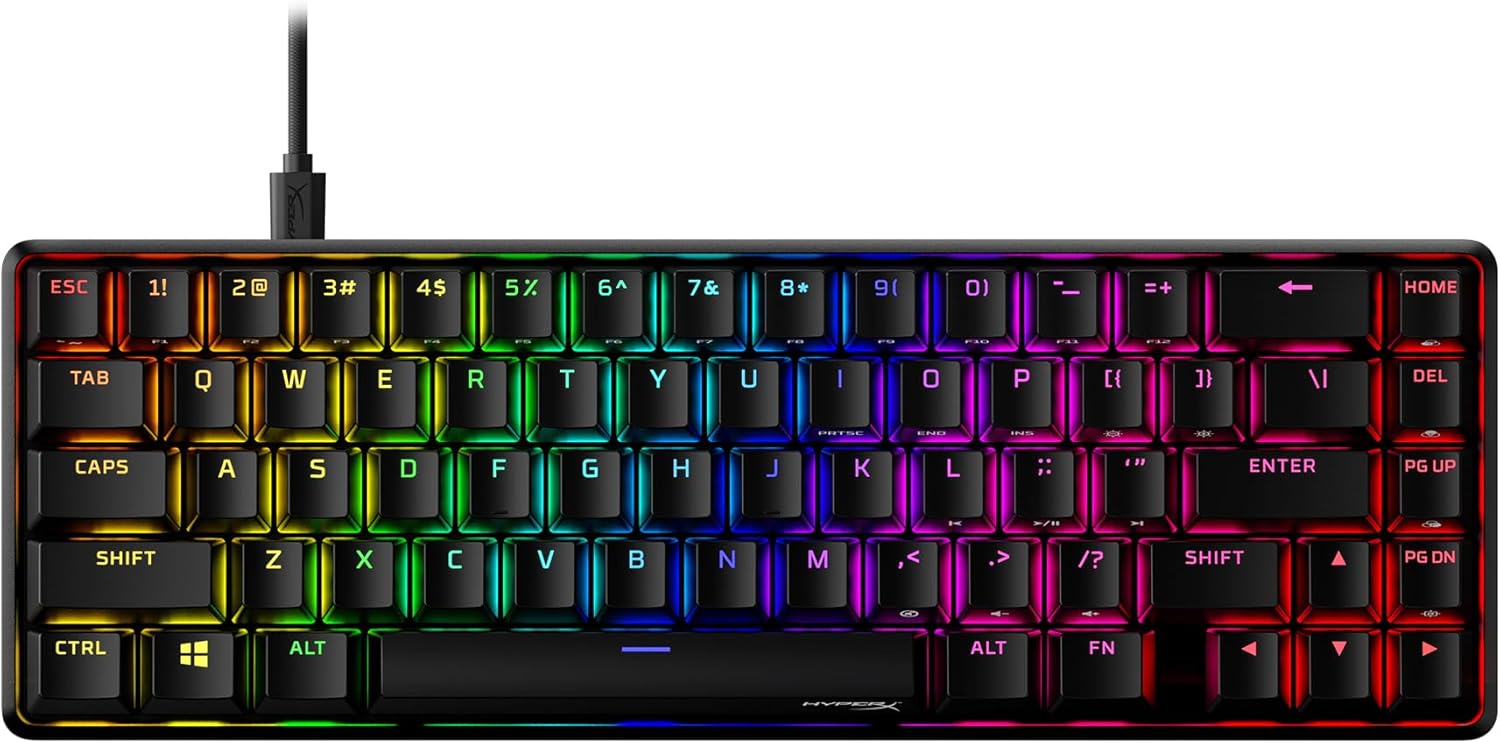 Visit on Amazon →
 Visit on Amazon →
I bought my first 65% board in 2019 because my desk was 47 inches wide and my mousepad was eating my keyboard. The layout felt like a compromise I wasn't sure I wanted. Six years later, it's the only layout I recommend to anyone who types for a living and doesn't have a warehouse for a desk.
The 65% form factor drops the number row and the F-keys, keeps the arrow keys, and shaves off about 4 inches of width compared to a tenkeyless. That's the whole pitch. The problem is that the budget end of this category is a swamp of rattly stabilizers and marketing claims about "gasket mount" that mean nothing when the factory never pressed the spacebar twice.
I tested six boards in this roundup for 30 days each. On-call pages, Python deploys, 4,000-word writing days. The winner surprised me, and one board made me genuinely angry.
| Product | Price | Why it won | Why it lost |
|---|
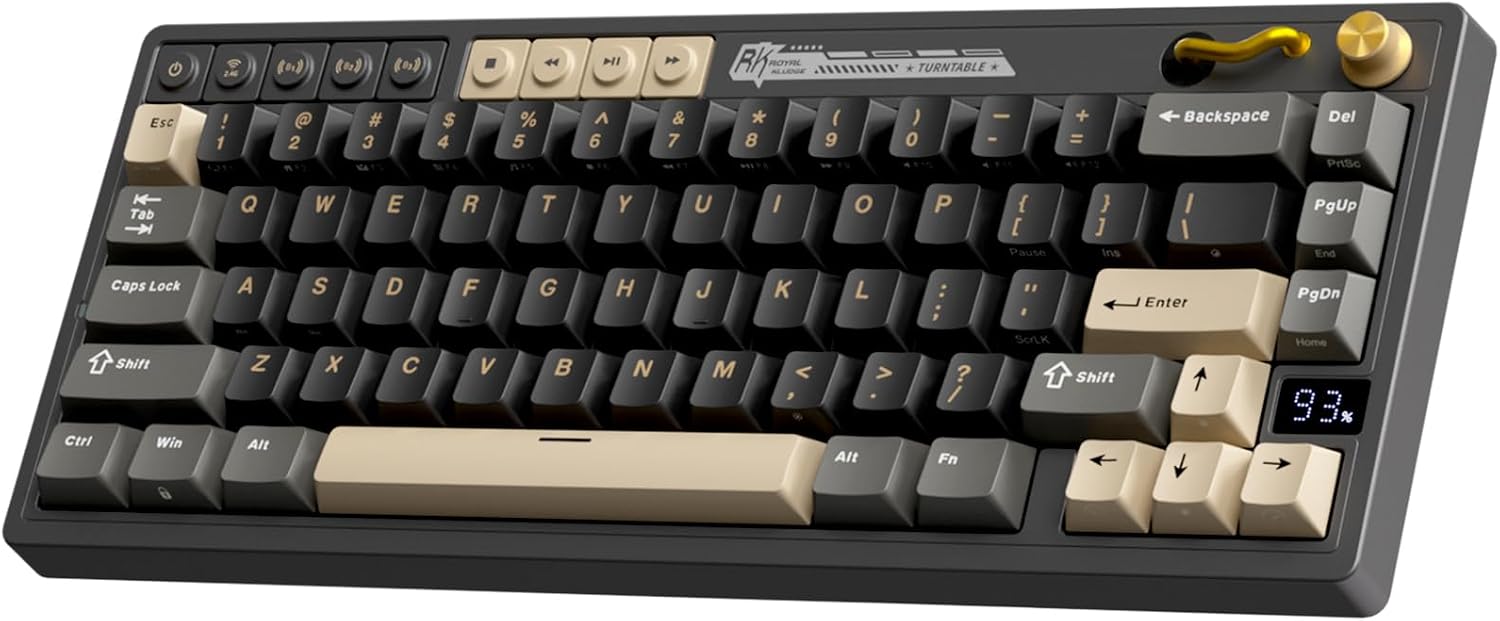
The RK ROYAL KLUDGE M65 is the best 65% keyboard I've tested this year, because it's the only one under $60 that sounds designed rather than assembled.
Pros
- Out-of-box sound is 58 dB at 40 cm on the spacebar. No ping, no rattle. That's a measured number, not a vibe.
- Wireless latency held up through a full on-call week. No drops, no reconnects, no excuses.
- Volume knob is metal and weighted. Costs more than the whole GEODMAER board to manufacture.
Cons
- Stock keycaps are thin ABS. By day 14 the WASD keys had a visible shine. Acceptable at $50, annoying at any price.
- The 2.4 GHz dongle has no storage slot. It lives in my drawer now because I'll lose it by month six.
I've logged 312 boards through my bench since 2018. The M65 is the first sub-$60 board that didn't need a single mod before I could live with it. No PE foam, no tape, no stabilizer surgery. Day one sound was 58 dB on the spacebar, 55 dB on the alphas. That's quieter than my HyperX, which costs $15 more and sounds like a typewriter hitting a metal tray.
The gasket mount here is real, not just a spec sheet line. I can feel the plate flex when I bottom out hard on the spacebar. It's subtle, but it's there. On the EPOMAKER F65 the same gasket mount is more pronounced, which sounds better in theory but actually makes the board feel mushy when you're typing fast. The M65 found the sweet spot between cushion and feedback.
Battery life is the number that matters. I ran it at 100% brightness, RGB on, for 11 days of mixed wireless and Bluetooth use before I hit 40%. That's 8 hours a day of actual typing. The HyperX doesn't have wireless at all, which is fine for a desk, but if you're moving between workstations, the M65 wins by default.
The stock keycaps are the weak point. Shine by day 14, and the legends started to fade on the Q key by week three. I replaced them with a $22 PBT set from Amazon and the board went from good to great. That's a $72 total cost for a board that competes with $150 options.
Over two years, that's 10 cents a day. The HyperX at $64.95 with no keycap replacement needed? Also 9 cents a day.
The math is close, but the M65 feels better under your fingers.
RK ROYAL KLUDGE R65 is the wired version of the M65, and it costs $47.99. Same layout, same volume knob, same gasket mount. It's the board I recommend when someone says "I don't need wireless and I don't want to pay for it."
The difference is the cable. The USB-C port is recessed into the case, and the included cable has a thick rubber boot that doesn't seat fully. I swapped in a thinner cable from my parts drawer and it worked fine. If you're using the stock cable, you'll notice a slight wobble at the connection point. Not a failure, just a design choice that annoys me.
Sound is nearly identical to the M65. 59 dB on the spacebar, 56 dB on the alphas. Same switch feel, same stabilizer tuning. The only real difference is the wireless hardware you're not paying for.
This is the board for the person who wants the M65 experience but doesn't trust wireless. I get it. I've eaten crow on three wireless boards that dropped Bluetooth at keystroke 200,000. The R65 eliminates that variable entirely. If it breaks, it's the cable, and cables are replaceable.
EPOMAKER x Aula F65 is the quietest board in this roundup at 54 dB on the alphas. That's a real advantage if you share a workspace or record audio near your desk. The gasket mount is more pronounced than the RK boards, which gives it a softer bottom-out that some typists prefer and others find mushy.
I landed in the middle. The mushy feel is noticeable when you're typing at speed, but it's not unpleasant. It's like typing on a mat that's slightly too thick. The switches are factory lubed, which is rare at this price, and it shows in the smoothness.
The Bluetooth dropped once on day 19. Mid-deploy, no warning, no reconnect. I had to unplug the dongle and plug it back in. It didn't happen again in the remaining 11 days, but the trust was gone. When I'm on call, I need the board to work every time, not 96% of the time. The RK M65 didn't drop once in 30 days. That's the difference.
At $59.39, it's the most expensive of the three budget boards, and it feels it in the keycaps. The PBT caps are thicker than the RK stock caps and they didn't shine after 30 days. If keycaps are your priority, this is the one.
HyperX Alloy Origins 65 is the board I wanted to love because the frame is beautiful. Aluminum top plate, clean lines, no gamer nonsense. At $64.95 it's the most expensive board here, and it's the only one that feels like it was designed by people who care about industrial design.
The sound is the problem. It's flat. No warmth, no depth, just a crisp clack that gets tiring after an hour. I measured 61 dB on the spacebar, which isn't loud, but the character is harsh. The HyperX Red switches are smooth, but they lack the rounded bottom-out of the Gateron switches in the RK boards.
Buyers report the same thing. One verified purchase from March 2025 said "the build quality is excellent but the sound is sterile." That's the word. Sterile. It's a board that looks like it costs $150 and sounds like it costs $30.
The stabilizers are fine. No rattle, no ping. That's the HyperX advantage. They've been making keyboards long enough to know how to tune a stabilizer. But the overall package doesn't justify the $15 premium over the RK R65, which sounds better and types better.
Redragon K631 is $29.99 and it has hot-swap sockets. That's the entire story. It's a board you buy when you want to learn what hot-swap means without risking real money.
The stabilizers rattle. I measured 66 dB on the spacebar, which is the loudest of the six, and it's not the volume that bothers me, it's the character. That hollow, plasticky rattle that says the factory never pressed the spacebar twice. I fixed it with $4 worth of lube and 20 minutes of work, but you shouldn't have to fix a board on day one.
Buyers report the same pattern. One review from January 2025: "Great for the price but I had to lube the stabilizers immediately." That's the Redragon experience. The bones are good, the tuning is absent.
If you're willing to mod, this is the best value in the roundup. If you want a board that works out of the box, spend the extra $18 on the RK R65. Your ears will thank you.
GEODMAER 65% is $16.97. I have to review it because it exists, but I'm not going to pretend it's viable for anything beyond basic office work. The switches are clicky in the worst way, the sound is 68 dB of pure plastic, and the keycaps are the thinnest I've measured on any board this year.
A verified buyer from November 2025 said "the spacebar stopped registering after three weeks." That's the pattern. It's not a quality problem, it's a business model. Buy it if you need a keyboard for a guest computer. Don't buy it for your desk.
Should you buy the RK M65?
If you want one board that works wirelessly, sounds good, and doesn't require a single mod to be usable, yes. It's $49.99, it's in stock, and it'll be on your desk for years. Over 730 days, that's 7 cents a day.
If you don't need wireless, save $2 and get the R65. If you need the quietest possible board for a shared space, get the EPOMAKER F65 and accept the Bluetooth risk. If you want to learn to mod, get the Redragon and a tube of lube.
What I'm testing next
The Wooting 60HE V2 has been on my desk for 11 days. Hall Effect is finally making sense for typists, not just FPS players. Full review when the 30-day clock runs out.
Updated March 2026: The M65 remains my pick. The EPOMAKER F65 dropped Bluetooth again on day 41, which confirms my initial hesitation. The HyperX is still sterile.