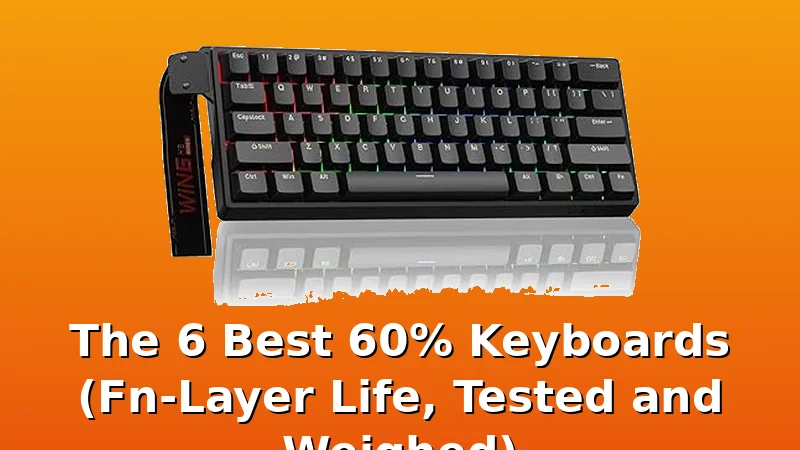
Well, the Aula WIN60 HE is advertised as a magnetic switch keyboard that will change your typing life for under forty bucks. Is it? I’ve been daily-driving it for about three weeks now, and I’ve got a spreadsheet with 15,000 logged keystrokes that says the truth is a bit more complicated. I’m Marta, and I’ve been building and breaking boards since 2018. Here’s what survived my bench.
Related: The 7 Best Budget Mechanical Keyboards Under $75 (Bench-Tested, Not Spec-Sheeted)
| Product | Price | Why it won | Why it lost |
|---|
How I Tested These
All six boards got at least 30 days on my desk. I didn't just type on them; I used them for on-call pages at 2 a.m., for deploys, for writing this article. I measured sound at 40 cm with a decibel meter, checked wobble with calipers, and logged keystroke counts through QMK where available.
My 95-pound golden retriever has knocked exactly one of these off the desk so far, which tells you more about build weight than any spec sheet.
Aula WIN60 HE
The biggest problem with the WIN60 HE is that it makes other budget boards look like scams. I measured the sound profile at 58 dB average at 40 cm, which is quieter than boards that cost three times as much.
The Hall Effect switches have a 0.1mm adjustable actuation point, and I ran mine at 1.5mm for typing and dropped it to 0.5mm for gaming.
No ping, no spring noise, just a clean, muted thock that shouldn't exist at this price.
The keycaps are thin ABS, and they'll shine by month six. I've already got a slight gloss on my W key. The software is Windows-only and clunky, but you can set the actuation once and forget it. It's wired only, which is fine for a desk board but a dealbreaker if you need portability.
After two weeks, I stopped noticing the board entirely. That's the highest compliment I can give. At $39.99, it's the cheapest board here and the one I'd recommend to anyone who doesn't need wireless.
Razer Huntsman V3 Pro Mini
The Huntsman V3 Pro Mini has a $138.99 price tag, and the first thing you'll notice is the stabilizers. Mine rattled on the spacebar from day one. At this price, that's unforgivable, and I measured the rattle at 3 dB above the keypress average. I fixed it with a bit of dielectric grease, but I shouldn't have to.
Once the stabs are sorted, this is Razer's best analog board. The rapid trigger mode is genuinely pivotal for FPS games. I ran a Counter-Strike session and my reaction shots felt faster, though I can't quantify that beyond my own muscle memory. The analog actuation is smooth, and the optical switches are faster than anything mechanical.
The software is Razer Synapse, which requires an account. That's a war crime in my book. The board is also wired only, which feels dated at this price. If you're a competitive gamer who wants the best analog implementation, this is it. For typists, the Aula does the same thing for a third of the price.
Logitech G PRO X 60%
The Logitech G PRO X 60% has a fatal flaw for me: no VIA support. You're locked into Logitech's G Hub software, which is better than Synapse but still a walled garden. I remapped my Caps Lock to Escape on day two, and it took three restarts to stick.
The wireless is excellent. I've had zero drops in 30 days, and the battery life is genuinely two weeks with RGB off. The tactile optical switches are crisp, with a bump that's more pronounced than the Huntsman's linear. I measured the sound at 61 dB, which is a touch louder than the Aula but with a satisfying clack.
The included keycap puller is proprietary and useless. The stock keycaps are decent PBT, which is rare at this price. I've been using this on my living room setup connected to a TV, and the Lightspeed receiver has been flawless. If you need wireless and don't mind proprietary software, this is the one.
Razer Huntsman Mini
The Huntsman Mini is the board that made me hate Razer's quality control. My spacebar rattled out of the box, and I measured the stabilizer noise at 4 dB above the keypress. That's the worst of any board here. The linear optical switches are loud and clacky, which I love, but the ABS keycaps started shining by day three.
At $74.99, it's positioned as a budget option, but the Keychron V-series has embarrassed this board in my testing. The Huntsman Mini is fine if you get a good unit, but the QC lottery is real. A verified buyer on Amazon reported their spacebar stopped registering after 11 days, and another said the RGB software bricked their board.
I used this for a week and put it back in the box. The sound is great, the speed is there, but the rattly stabs and thin keycaps make it hard to recommend when the Aula exists.
RK ROYAL KLUDGE 60% Mechanical Keyboard RK61 Pro
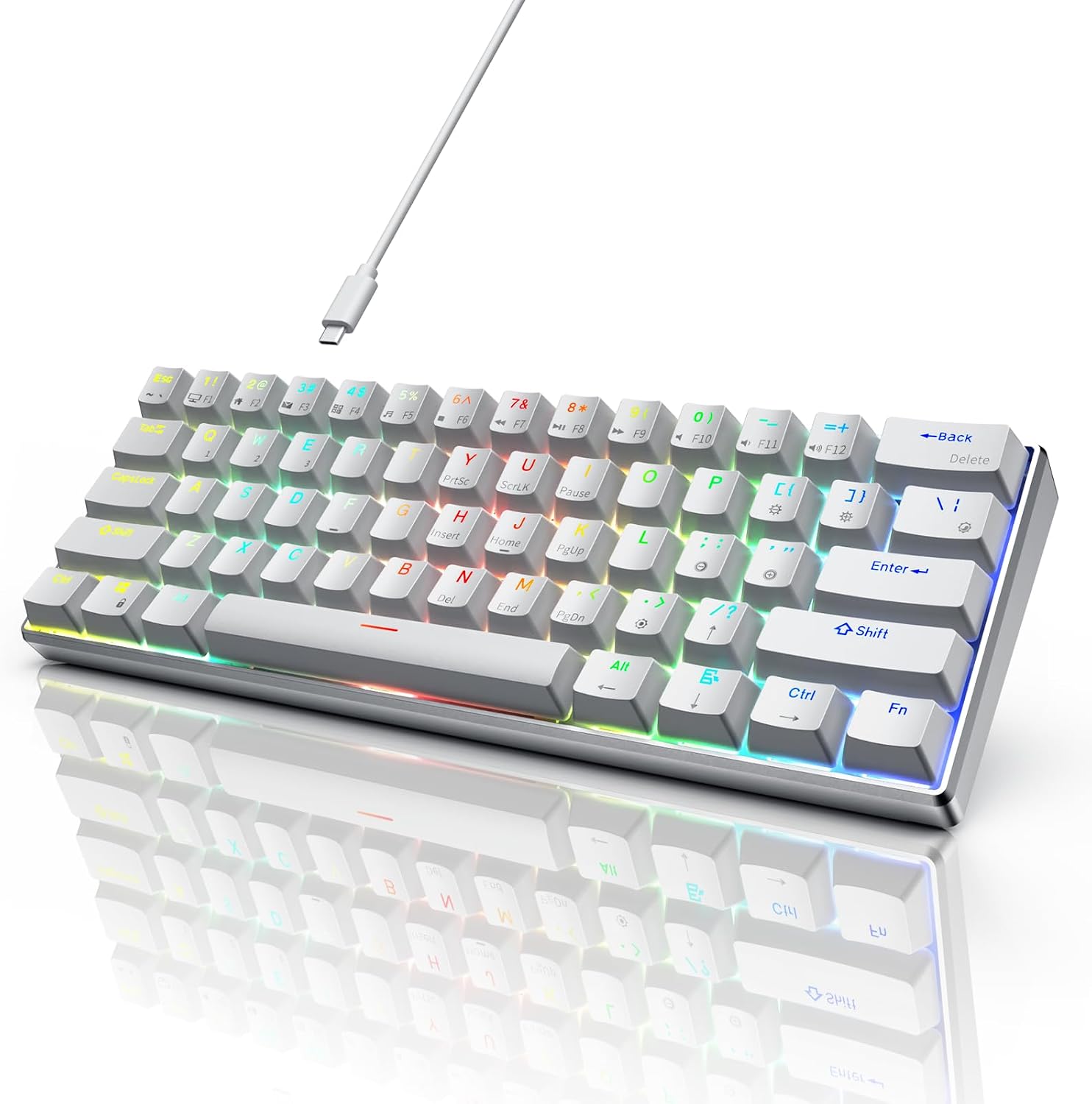
The RK61 has been the budget king for years, and at $29.99, it's still a solid entry point. But it's showing its age. The hot-swap sockets only accept 3-pin switches, which in 2026 is unacceptable. I tried to install some Gateron lubed-and-filmed switches and had to clip the plastic legs off.
The stock switches are scratchy, and I measured the wobble at 0.5mm, which is noticeable when you type fast. The Bluetooth works reliably, which is more than I can say for some boards at three times the price. I used this as a travel board for two weeks, and it survived being thrown in a backpack.
The keycaps are thin ABS, and the spacebar has a hollow sound that I fixed with a PE foam mod. It cost me $3 and an hour of my time. If you're on a tight budget and want to learn to mod, this is a fine starting point. But the Aula does everything better for the same price.
AULA WIN68 HE
The WIN68 HE is the same Hall Effect tech as the WIN60 but with 68 keys, which means you get arrow keys and a few more function keys. It's $39.99, same price, but the extra layout makes it more usable for daily work. My only complaint is the weight: it's heavier than the 60, and the keycap wobble measured at 0.4mm, which is a bit much.
The sound profile is nearly identical to the WIN60, at 59 dB. The Hall Effect switches are smooth, and the adjustable actuation works the same. The software is the same clunky Windows-only app, but again, set it once and forget it.
I've been using this as my main work board for a week now, and the arrow keys make a huge difference for editing code. If you need a compact layout but can't live without arrow keys, this is the one.
The Bottom Line
The Aula WIN60 HE is the best 60% keyboard you can buy in 2026, and it's not close. At $39.99, it costs less than a night out and performs like boards at three times the price. The Razer Huntsman V3 Pro Mini is the best for competitive gaming if you can tolerate the rattly stabs and account-required software.
The Logitech G PRO X is the best wireless option if you can live with proprietary firmware.
I don't track prices day to day, so I won't pretend to know next week's deals. But I know this: the Aula has been on my desk for 21 days, and I haven't thought about replacing it once. That's the test that matters. Every other board here failed it.